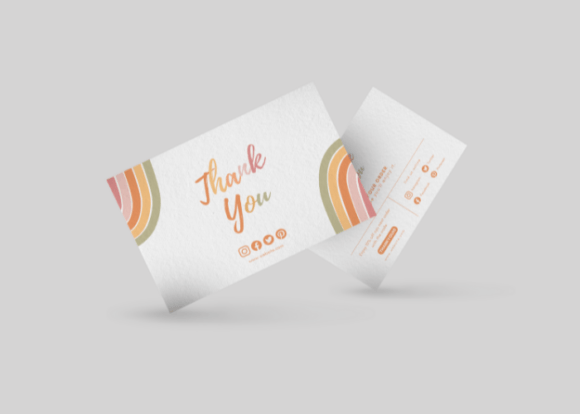
Thank You Card Boho Style
A Designer’s First Glance: Whimsy with Quiet Intention
When Thank You Card Boho Style opened in my Canva PRO workspace, I didn’t see just a greeting—I saw texture, rhythm, and a subtle invitation to slow down. The layout leans into organic asymmetry: hand-drawn script for “Thank You,” soft botanical flourishes—think trailing eucalyptus leaves and tiny daisies—and a gentle border that breathes rather than confines. It doesn’t shout. It settles. That’s its strength—and its first real test for embroidery.
From Screen to Stitch: What Holds Up (and What Needs Thought)
I tested Thank You Card Boho Style as the centerpiece on a custom embroidered tote bag for a local herbalist’s pop-up shop. The design translated well at 4.5" wide—large enough to read clearly, small enough to feel intentional on natural canvas. But here’s where experience kicks in: those delicate leaf tips? They’re charming on screen, but in satin stitch on medium-weight fabric, they risk fraying or losing definition without proper stabilizer and moderate stitch density. The script lettering has generous spacing and open counters—excellent for legibility after stitching—but avoid shrinking it below 3.25" unless you’re using a fine thread and ultra-stable substrate.
Fabric & Form: Where This Design Truly Belongs
Thank You Card Boho Style shines brightest on structured, low-stretch surfaces: linen tea towels, cotton aprons, woven pillow covers, and unlined canvas totes. On baby onesies or stretchy jersey sweatshirts? Proceed with caution. The flowing lines demand stability—especially around the curved lower edge of the card motif. I’d skip it for curved cap fronts or tightly seamed sleeves unless simplified first. For patches, it works beautifully as an applique design when backed with tear-away stabilizer and finished with a clean satin-stitched border. As a holiday embroidery piece—say, on a muslin gift bag or a neutral-toned kitchen towel—it adds warmth without clutter.
Where Simplicity Becomes Strategy
This isn’t a high-detail machine embroidery design built for dense fill stitches or intricate underlay. Its charm lives in suggestion—not replication. That means fewer thread breaks, smoother hooping, and faster stitch-out times. For Etsy sellers bundling digital embroidery files, Thank You Card Boho Style pairs naturally with minimalist nursery decor kits or small-batch boutique branding assets. As a printable mockup element, it elevates product photography—just be sure your final embroidered version matches the relaxed, handmade feel it promises.
Real-World Red Flags: When to Pause & Adapt
Don’t assume it’s ready for dark fabrics without testing. The light-weight line work and thin decorative strokes can disappear on navy or charcoal unless you adjust thread colors thoughtfully—try matte ecru or oatmeal instead of stark white. On textured fabrics like terry cloth or bouclé, those fine stems may sink or blur; consider simplifying the foliage or converting key elements to running stitch outlines. And if you’re planning frequent washing—like for baby embroidery or kitchen textiles—verify that stitch density isn’t so low it invites puckering, nor so high it creates stiff, inflexible areas.
What It Says About Your Brand (Before a Single Thread Is Cut)
Using Thank You Card Boho Style signals intentionality. It tells customers you value authenticity over flash, care in gesture over speed, and craftsmanship over convenience. That matters—for handmade product listings, personalized gifts, and small shop merchandise where emotional resonance drives repeat buyers. But it also demands consistency: if your brand voice is bold and graphic, this design may feel tonally mismatched. Use it where softness, gratitude, and tactile warmth align with your story—not as filler.
Practical Notes Every Embroidery Designer Should Check
- Test Thank You Card Boho Style on scrap fabric matching your final project’s weight and weave—especially before cutting into premium linen or organic cotton.
- Review stitch density visually in your embroidery software; look for gaps in fill areas and potential thread nesting in tight corners.
- Confirm hoop size compatibility—its natural width fits standard 4"x4" hoops comfortably, but check how much margin remains for re-hooping on layered garments.
- Inspect small details at 200% zoom: are the daisy centers defined enough to hold shape in satin stitch? Do leaf veins translate as readable texture—or just noise?
- Mock it up in black and white first to assess contrast and balance—then layer it over both light and dark fabric swatches digitally.
- Use cutaway stabilizer for knits or loosely woven fabrics; tear-away works well for stable cottons and linens.
- If selling finished products featuring this design, verify licensing terms—this is a digital item, not automatically cleared for commercial embroidery use without permission.
- For craft business owners: pair it with cohesive design assets—like coordinating monogram motifs or simple border repeats—to build a unified Print Templates collection.
Final Thought: A Quiet Anchor in a Busy Market
Thank You Card Boho Style won’t dominate a shelf or stop scrollers mid-feed—but it lingers. In a world saturated with loud, fast, and overly polished graphics, it offers something rarer: space to land. As a Graphics asset, it’s not about versatility at all costs. It’s about choosing the right moment—the handwritten note tucked into a handmade soap bundle, the tender detail on a baby quilt label, the understated tag on a ceramicist’s holiday mug set. Used with attention, it deepens trust. Stitched with care, it becomes more than decoration. It becomes thanks—made tangible.