Collection of Oriental Style Islamic Graphics & Print Templates
First Impression: Elegant, Reverent, and Instantly Recognizable
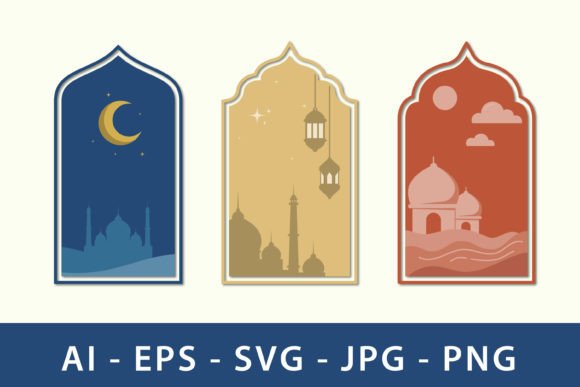
Opening Collection of Oriental Style Islamic, I felt immediate visual resonance—this isn’t generic clipart. The delicate arches, geometric window patterns, crescent moon motifs, and lantern silhouettes carry quiet authority and cultural authenticity. It evokes warmth, tradition, and spiritual intention—not just decoration. For brand owners launching a Ramadan campaign, this graphic design asset delivers an elevated emotional tone: respectful, serene, and celebratory without being ornate to the point of distraction. It leans into premium visuals rather than casual branding, making it ideal for lifestyle content creators, online coaches offering spiritual wellness programs, or small business owners selling handmade halal beauty products, curated gift boxes, or mindful apparel.
Where It Strengthens Brand Identity—Without Overpowering
In real-world use, Collection of Oriental Style Islamic excels where visual hierarchy and audience trust intersect. As a digital product for social media graphics, it anchors Instagram posts with instant cultural context—no need for lengthy captions to signal intent. On Pinterest pins promoting a “Ramadan Self-Care Kit,” the mosque silhouette paired with soft gradients creates scroll-stopping elegance. As a printable design for packaging inserts or event flyers, its vector-based clarity ensures crisp reproduction at any scale—critical for product labels or branded stickers. When layered into Canva templates for email banners or blog headers, it reinforces consistent branding across touchpoints while leaving ample white space for typography and calls-to-action.
Real Campaign Fit: A Seasonal Content Kit for a Halal Skincare Launch
Recently, I used Collection of Oriental Style Islamic to build a full Ramadan content kit for a halal skincare brand. We deployed the arch motifs as subtle watermarks behind product photography on Facebook ads—adding sophistication without obscuring ingredients or benefits. The lantern illustration became the hero graphic for their lead magnet (“5 Days of Mindful Skincare Rituals”), instantly communicating seasonality and care. For editorial design in their newsletter, we scaled down the mosque vector as a decorative divider—enhancing readability while reinforcing brand voice. Crucially, it helped unify visuals across web design, digital ads, and printable promotions—all under one cohesive, culturally grounded aesthetic.
Marketing Goals It Directly Supports
- Stronger first impression: Its refined line work and balanced composition signal professionalism before a single word is read.
- Clearer visual hierarchy: Arches and frames naturally guide the eye—ideal for hero graphics and campaign headers.
- Better product presentation: Works beautifully as background texture behind clean product shots (e.g., soap bars on a patterned tile base).
- Improved audience trust: Authentic Islamic motifs—handled with restraint—signal cultural respect, not appropriation.
- More memorable campaign visuals: Unlike overused stock vectors, these illustrations stand out in crowded feeds and editorial layouts.
Best Uses: Contexts Where It Shines
Collection of Oriental Style Islamic performs strongest as decorative brand elements that elevate—not dominate. Think: website headers with a faint arch watermark; Instagram story stickers featuring the crescent moon; packaging accents on luxury gift box sleeves; social media covers with a centered lantern motif; or editorial layouts where geometry adds rhythm without clutter. It’s especially powerful in content bundles—like a digital product bundle for Muslim creatives needing ready-made Canva templates—or as part of a design bundle for small business branding kits targeting faith-aligned entrepreneurs.
Where to Use It Carefully
This graphic design asset isn’t built for dense information layouts. Avoid using it in text-heavy Facebook ads or low-contrast backgrounds where detail gets lost. It can overwhelm overly minimal brands—especially those rooted in Scandinavian or tech aesthetics—so always test against your existing brand palette. Skip it for formal corporate branding (e.g., law firms or fintech) unless aligned with a specific cultural initiative. And never assume it works at thumbnail size: preview every PNG design on mobile screens first—some intricate arch details fade below 200px width.
Practical Brand Designer Notes You Can’t Skip
Before integrating Collection of Oriental Style Islamic into client work or your own commercial design, run these checks: Test how the SVG design layers with your primary brand color—does gold foil pairing enhance or clash? Check black-and-white usage: does the mosque outline retain legibility when inverted? Place it inside real campaign mockups—on a tote bag, email banner, and Instagram post—to assess balance and breathing room. Compare spacing against competitor visuals: does it feel distinct yet familiar? Try pairing with serif fonts for editorial weight, sans serifs for modern clarity, and script fonts only where contrast supports readability—not competition. Most critically: verify the commercial license covers paid campaigns, digital product resale, and client deliverables. This isn’t just clipart—it’s a strategic design asset.
Why It Belongs in Your Creative Marketplace Toolkit
For content marketers, bloggers, and creative entrepreneurs building intentional, values-driven brands, Collection of Oriental Style Islamic offers rare alignment: cultural specificity, visual polish, and versatile application. It supports small business branding without sacrificing authenticity—and elevates marketing visuals far beyond basic greeting card templates. Whether you’re designing merchandise, refreshing a seasonal web design, or building a digital product for Muslim audiences, this collection delivers professional branding depth with zero creative overhead. In a landscape flooded with generic vectors, it’s a quietly powerful reminder that great design assets don’t shout—they resonate.